

A well-designed backyard can become much more than an attractive outdoor area. For families with children, it can be a place to move, explore, relax, socialise and spend time away from screens.
The challenge is that adults and children often look at a backyard very differently. Adults may appreciate neat garden beds, outdoor furniture and carefully maintained lawns, while children are more interested in what they can actually do in the space.
Creating a backyard that works for the whole family requires finding a balance between appearance, practicality and opportunities for play.
Create Different Zones for Different Activities
One of the easiest ways to make an outdoor area more useful is to divide it into informal zones.
There might be a shaded area for sitting and reading, an open section of lawn for ball games, a table for drawing or messy activities, and another part of the garden dedicated to more energetic play.
These zones do not necessarily need fences or physical boundaries. Changes in surfaces, furniture or landscaping can naturally communicate how each part of the backyard can be used.
Having several activity options is particularly useful when children of different ages share the same space.
Give Children Reasons to Move
Children are often naturally active when the environment gives them something interesting to interact with.
A completely empty lawn may provide room to run, but adding equipment or simple physical challenges can encourage a wider range of movement.
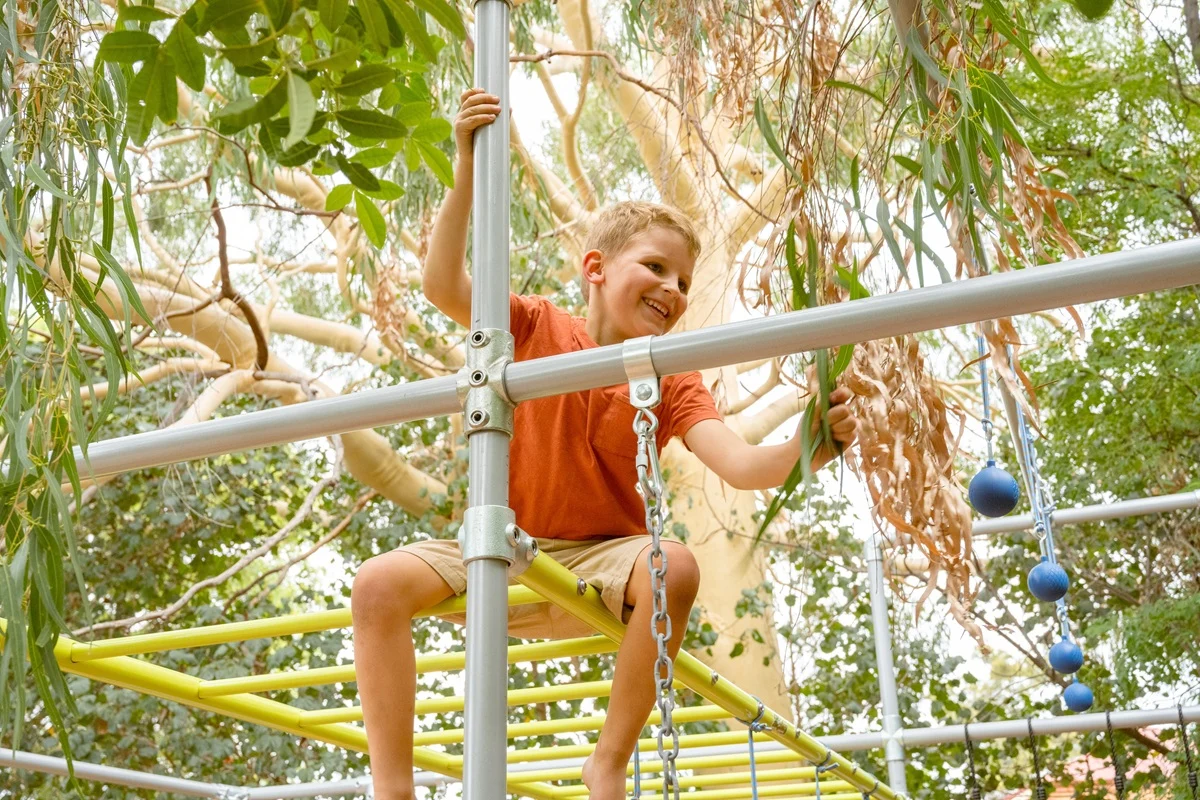
Swings, stepping stones, climbing structures, balance elements and Monkey Bars can introduce opportunities for climbing, hanging, swinging and imaginative games without requiring organised activities every time children go outside.
The key is not necessarily filling the backyard with equipment. A few carefully selected elements can create many different ways to play.
Leave Some Space Unplanned
It can be tempting to design every square metre of a backyard, but children often make creative use of spaces adults consider unfinished.
An open patch of grass can become a soccer field one afternoon and a picnic area the next. A quiet corner might turn into a pretend campsite, while a few movable objects can become part of an obstacle course.
Flexible spaces allow children to invent their own games rather than relying entirely on fixed activities.
Keeping some areas open also makes it easier for the backyard to adapt as children’s interests change.
Think Beyond Young Children
Outdoor spaces should ideally remain useful for several years.
Equipment that only interests a toddler may eventually take up valuable space once the child grows older. When planning permanent or semi-permanent features, consider whether they can continue to offer challenges or be adapted over time.
Older children may enjoy climbing, ball sports, fitness activities, social spaces or simply somewhere comfortable to spend time with friends.
A backyard that can change gradually is usually more practical than one designed around a very narrow age range.
Include Comfortable Places for Adults
Children are more likely to spend time outside when the backyard is also somewhere parents enjoy being.
Comfortable seating, shade and a convenient outdoor table can make a significant difference. Adults can relax, work or have a coffee nearby while younger children play.
This helps the outdoor area become part of everyday family life rather than somewhere children are occasionally sent to play.
Work With the Space You Have
A family-friendly backyard does not have to be large.
Smaller gardens simply require more thoughtful planning. Vertical features, compact equipment and multi-purpose areas can provide plenty of activity without dominating the entire yard.
Even balconies, courtyards and narrow gardens can include opportunities for gardening, sensory activities, games and outdoor relaxation.
The objective should be to make the available space useful rather than trying to recreate a large suburban playground.
Make Outdoor Time Easy
One of the biggest barriers to outdoor play is inconvenience.
If children need an adult to find equipment, unlock storage or set everything up before they can play, they may be less likely to head outside spontaneously.
Keeping frequently used items accessible can help. Balls, chalk, skipping ropes and simple outdoor toys can be stored where children can reach them safely.
A backyard becomes far more valuable when using it feels effortless.
A Backyard Should Invite Participation
The best family backyards are rarely the most elaborate ones. They are the spaces that give everyone a reason to step outside.
By combining open areas, comfortable seating, opportunities for movement and flexible play options, families can create an outdoor environment that continues to be useful as children grow.
Ultimately, a successful backyard is not defined by how it looks when nobody is using it. Its real value comes from how often the family wants to be there.